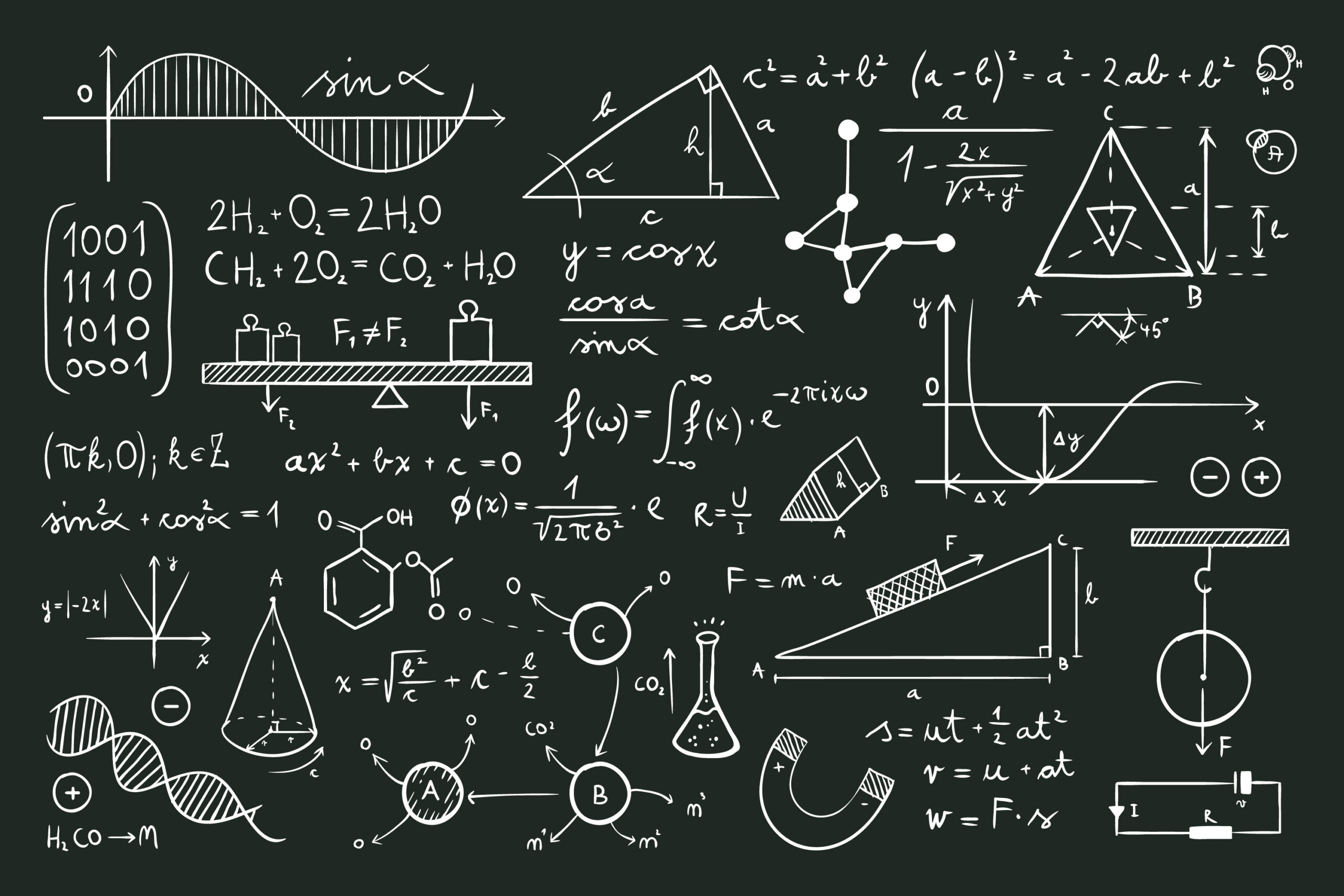
Numbers are everywhere — in the rhythm of music, the structure of a leaf, the motion of planets, the symmetry of crystals. They seem to exist beyond us, timeless and perfect. Two plus two is four, no matter where or when. But does this universality mean that mathematical forms exist independently of the mind, or are they simply patterns our consciousness projects onto the world?
Plato once imagined a realm of ideal Forms — perfect, eternal entities of which all physical things are mere shadows. In that realm, mathematical truths would exist whether or not any human ever thought them. The circle, in its perfect form, could never truly exist in the material world — only as an abstract truth perceived by the intellect. To Plato, mathematics revealed not invention, but discovery: the uncovering of what eternally is.
Yet modern thought complicates this view. If numbers and geometry live apart from us, where do they exist? Outside space and time? Or do they only come into being when a mind recognizes a pattern? Many philosophers and cognitive scientists suggest that mathematics arises within human perception — as a language our brains evolved to describe relations, quantity, and order. In this view, “two” and “three” are not eternal realities, but mental tools — abstractions that help us map the chaos of experience into structure.
And still, the mystery remains. How can something born in the mind so perfectly predict the behavior of the universe? Equations imagined by humans often describe realities that only later become observable. Does that imply discovery rather than invention — or is it that the universe and the mind share a common structure, one mirroring the other?
Perhaps mathematics is both: a bridge between reality and thought, part reflection, part creation. It may not exist out there or in here, but in the dialogue between the two — where perception meets order, and imagination touches truth.
Để lại một bình luận