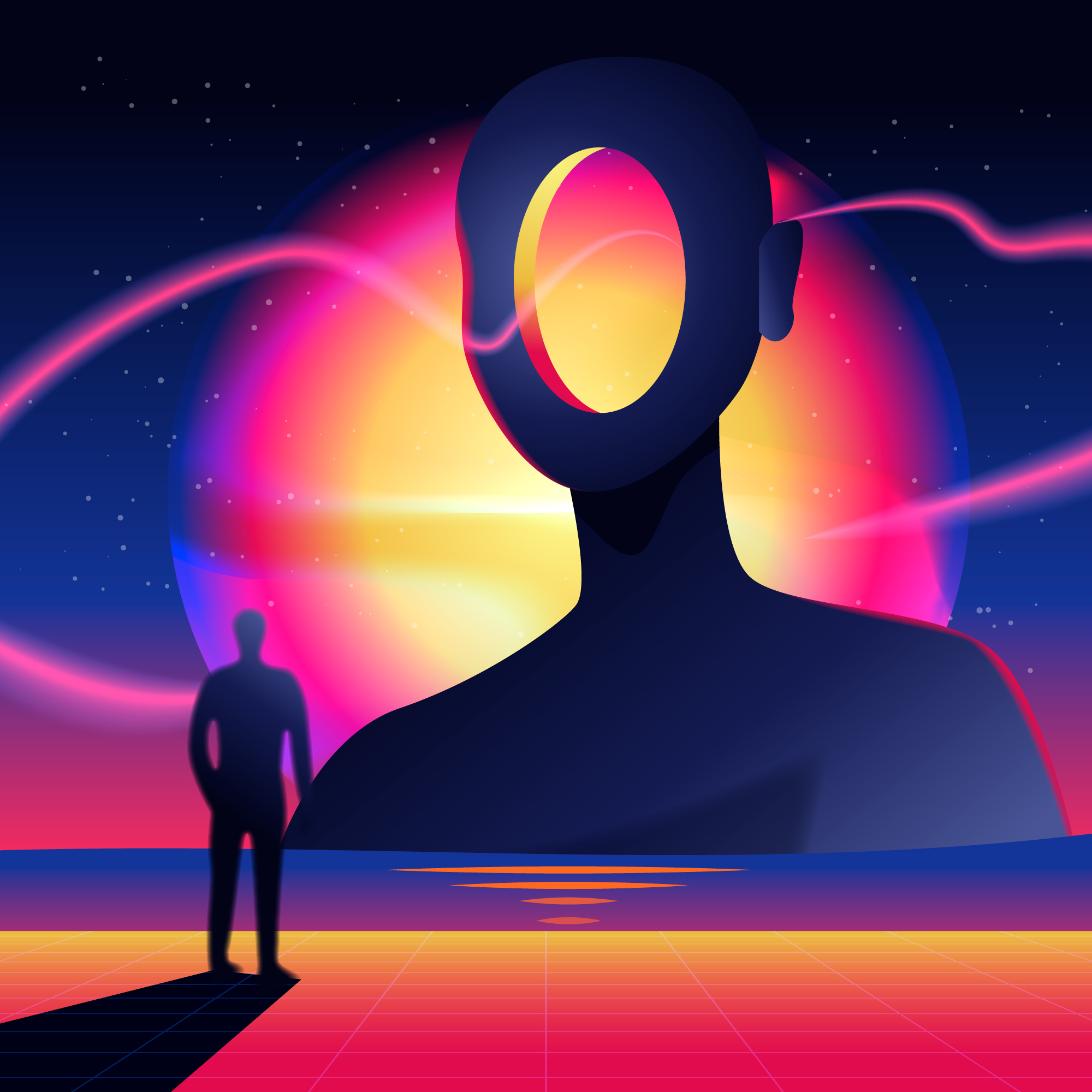
Have you ever tried to locate the “self” — the one who thinks, feels, and experiences? At first, it seems obvious. There is a me behind every thought, the one who perceives and decides. Yet, when we look closer, this “me” becomes elusive. Thoughts arise, feelings shift, memories fade — but where is the thinker, the feeler, the rememberer? The more we look, the less there seems to be a fixed center. What we call “I” might not be a solid thing at all, but rather a pattern — a story told by the mind to make sense of experience.
Across philosophy and science alike, this idea recurs: that the self is not a single, unchanging entity, but a dynamic construction. Neuroscience shows that our sense of self emerges from countless brain processes working together — none of which, by themselves, are the self. Likewise, in Buddhist philosophy, the doctrine of anatta (“no-self”) teaches that identity is merely a bundle of ever-changing sensations, perceptions, and thoughts. Strip them away, and there is no core left — only the flow of experience itself.
Yet this illusion, if illusion it is, feels deeply real. The sense of ownership — I am thinking this, I am choosing that — is what gives coherence to our lives. Without it, continuity collapses; life becomes a series of disconnected events. Perhaps the self functions like the flame of a candle: not a thing in itself, but a process sustained by constant change. Each moment the flame renews, yet we still call it the same light.
If the self is an illusion, what does that mean for choice, love, or moral responsibility? Maybe illusion does not mean false, but functional. The “self” could be a useful fiction — a narrative that allows consciousness to navigate a complex world. Through it, we experience meaning, make commitments, and build connection.
Whether the self truly exists or not may matter less than how the illusion works. In the end, perhaps to be human is not to be someone fixed, but to become — continually rewritten by memory, relation, and time itself.
Để lại một bình luận